

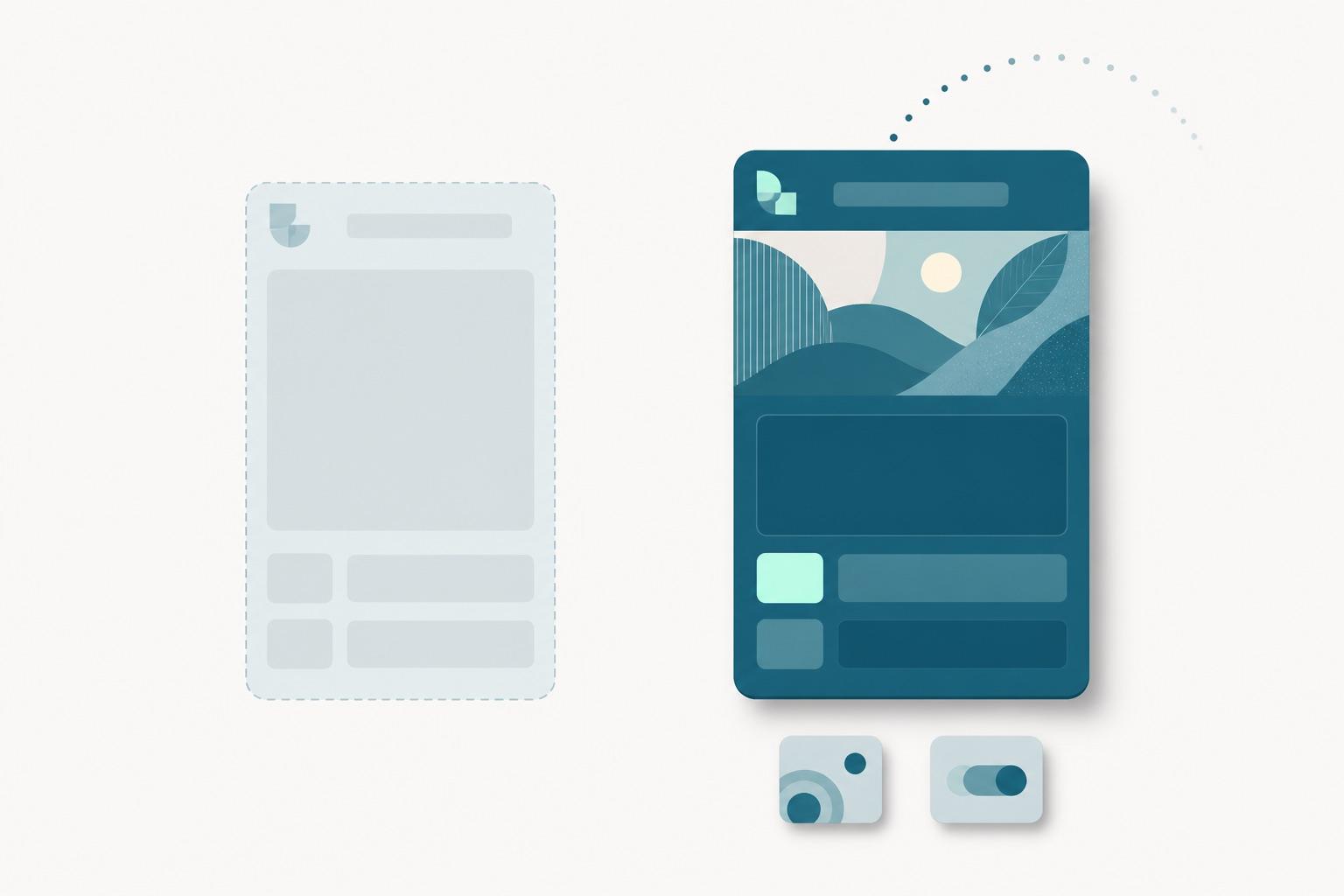
An App Clip Code is Apple's own scannable marker: a circular design, printed in a merchant's chosen colors, that launches an App Clip when an iPhone camera sees it. Codes can also carry an embedded NFC tag, so the same sticker on a counter or table works by tap as well as by scan. Apple generates them from a URL through a developer tool, and the visual style is fixed, since the ring and dot pattern are what iOS recognizes.
The appeal is the moment of arrival. A camera pointed at a code brings up a card at the bottom of the screen showing the merchant's name and what the clip does, before anything opens. That preview is the reason App Clip Codes feel more considered than a bare QR code pointed at a web page.
The cost is reach. An App Clip Code means nothing to an Android phone, so a counter that uses one still needs a second path for everyone else. Elsewhere it costs more than that, because an App Clip normally exists only if the merchant ships and maintains an iOS app for it to belong to. On Stell it does not: hosted onboarding runs as an App Clip with no iOS app of the merchant's behind it, and the same flow falls back to the hosted web form on every other device, so both paths are one enrollment flow rather than two.
For a wallet program, the baseline is still hosted onboarding reached by a plain QR code that every camera on every phone already reads, ending in an add to wallet step that puts the pass in Apple Wallet or Google Wallet as appropriate. What an embedded NFC tag adds is the tap: a poster or a counter sticker that joins an iPhone customer when they hold their phone near it, with no camera, no aiming and no app. On Stell that tap opens the same join flow the QR code does, so it is an extra way in rather than a second program to run.